Why SIEM Even Matters
Modern organizations generate massive amounts of log data from firewalls, servers, endpoints, and cloud platforms. Without a centralized approach, detecting security incidents becomes slow and unreliable.
From a security standpoint, this directly affects the core principles of Confidentiality, Integrity, and Availability (CIA). If threats go unnoticed, sensitive data can be exposed, systems can be altered, and services can become unavailable.
What is SIEM?
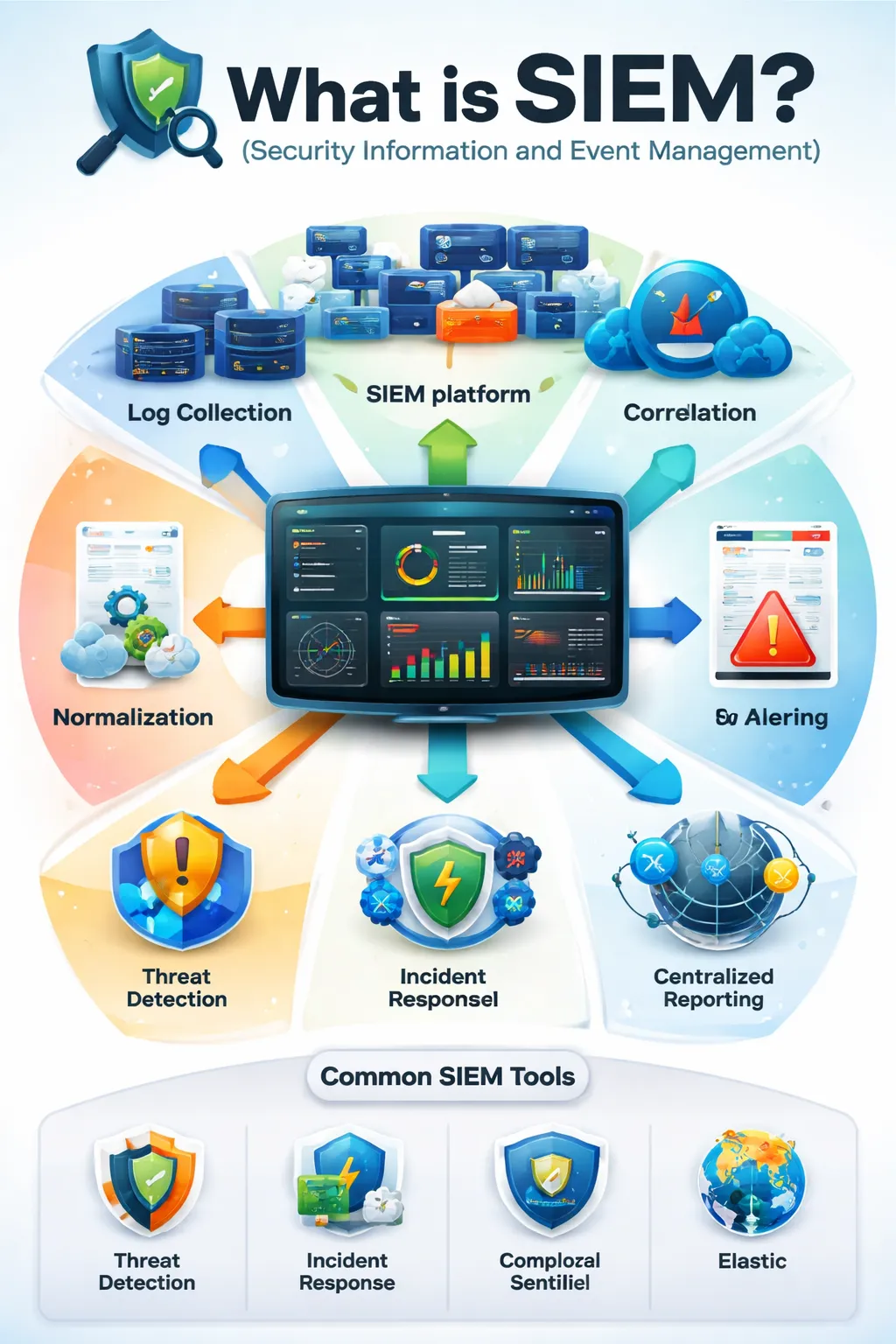
Security Information and Event Management (SIEM) is a solution that collects and analyzes log data from across an organization’s IT environment to detect suspicious activities and potential security incidents.
It combines two important capabilities:
- Security Information Management (SIM): Focused on log storage, analysis, and reporting
- Security Event Management (SEM): Focused on real-time monitoring, correlation, and alerting
Together, these functions provide both visibility and actionable insight for security teams.
SIEM Architecture (CISSP Perspective)
- Log Sources: Firewalls, IDS/IPS, servers, applications, and cloud services
- Collection Layer: Agents or syslog mechanisms that gather logs
- Normalization: Converting different log formats into a common structure
- Correlation Engine: Identifies patterns and relationships across events
- Storage: Retains logs for audits and forensic investigations
- Presentation Layer: Dashboards, alerts, and reports for analysts
How SIEM Works in Practice
- Data Collection: Continuous ingestion of logs from multiple systems
- Event Correlation: Linking events to identify attack patterns
- Alerting: Generating alerts based on rules or anomalies
- Incident Support: Assisting analysts in investigation and response
SIEM and Security Controls
From a CISSP perspective, SIEM supports multiple categories of security controls:
- Detective Controls: Identifies and monitors security events
- Preventive Controls (indirect): Improves defenses through insights and tuning
- Corrective Controls: Enables faster incident response and remediation
Compliance and Governance
SIEM solutions are widely used to support regulatory and compliance requirements by maintaining logs and generating reports.
- Supports frameworks such as ISO 27001, NIST, and PCI-DSS
- Provides audit trails for investigations
- Helps demonstrate due diligence and accountability
Key Benefits
- Centralized visibility across systems
- Faster detection and response to threats
- Improved compliance and audit readiness
- Better insight through event correlation
Common SIEM Tools
- Splunk
- IBM QRadar
- Wazuh
- Microsoft Sentinel
- Elastic SIEM
SIEM vs Log Management
Basic log management focuses on collecting and storing logs. SIEM builds on this by analyzing and correlating those logs to detect threats and generate actionable alerts.
Challenges to Be Aware Of
- High deployment and operational cost
- Requires continuous tuning to reduce false positives
- Needs skilled analysts to operate effectively
- Scalability challenges with large data volumes
Final Thoughts
SIEM plays a central role in modern cybersecurity operations. It supports a defense-in-depth strategy by improving visibility, enabling early detection, and strengthening incident response capabilities.
For both practitioners and CISSP candidates, understanding SIEM is essential for building and managing effective security operations.